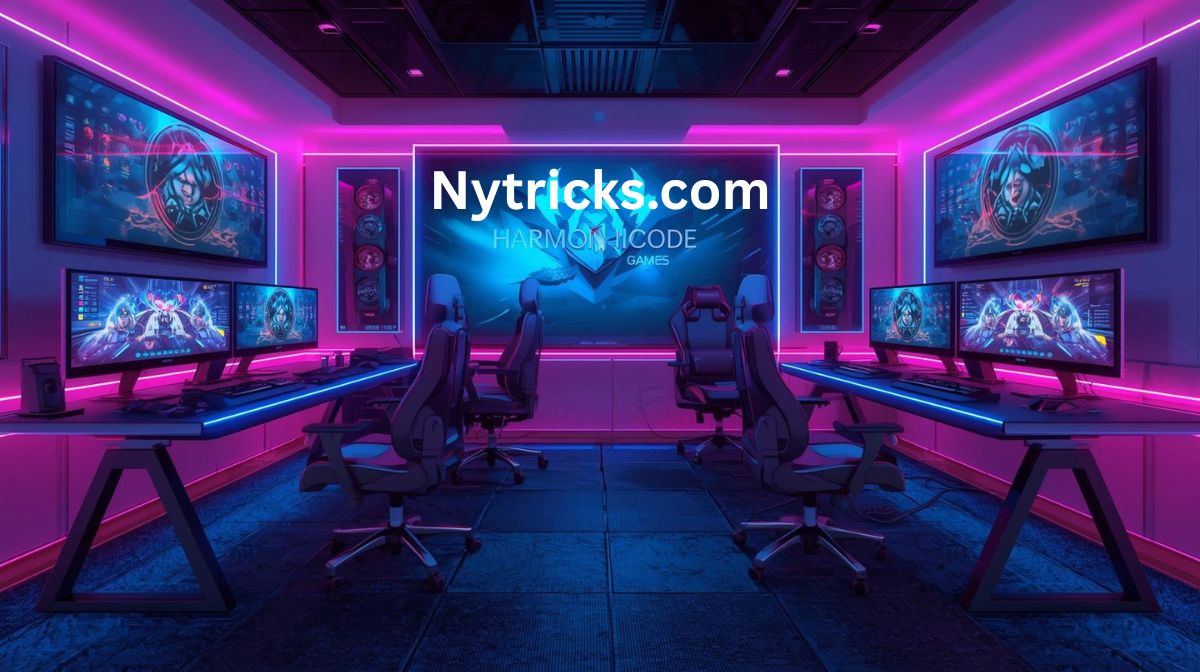
Gaming is changing fast in the United States. Players want deeper worlds and smarter systems. That is where Gaming Harmonicode steps in. It blends code, music, and strategy into one living structure. Instead of pressing buttons alone, you shape outcomes through sound. This is not a trend. It is a shift toward Audio-driven gameplay and fully responsive digital worlds.
At its core, Gaming Harmonicode transforms audio into action. Developers now use Sound-based game mechanics, advanced Interactive music systems, and intelligent harmonic engines. The result feels alive. You are not just playing a title. You are stepping inside a breathing Music-powered virtual worlds built on tone, timing, and tension.
Introduction to Gaming Harmonicode
The gaming world is shifting fast, and harmonicode games are leading that evolution. Instead of treating music as background sound, these titles transform audio into action. Through Audio-driven gameplay and intelligent Sound-based game mechanics, players influence the environment using tone and rhythm. Every movement can trigger harmonic reactions powered by advanced Interactive music systems.
This creates living, breathing worlds shaped by Harmonic frequencies rather than static scripts. Unlike traditional formats, harmonicode games rely on responsive sound layers that adapt in real time. The result feels personal and immersive. You are not just playing a game. You are shaping it through Real-time audio feedback loops that respond instantly.
What is Gaming Harmonicode?
So, What is gaming harmonicode in simple terms? It is a framework where Harmonic frequencies and Layered harmonics act as logic triggers. Instead of code responding only to button input, sound itself becomes executable data. Through Audio-modulated data systems and precise Frequency detection systems, tone becomes instruction.
Think of it like this. Music becomes the programming language. In traditional games, you press a key. In Gaming Harmonicode, you generate a sound. That sound triggers an event through Chord progression triggers and Rhythm-based interaction. This is true Harmonic gameplay design where tone shapes physics, AI, and narrative arcs.
The Evolution of Harmonicode Games :-
The roots of Gaming Harmonicode trace back to early experiments with Generative music AI and Adaptive music engines. At first, sound only reacted to events. Now it predicts them. Thanks to advanced Digital Signal Processing (DSP) and Low-latency audio systems, games process complex frequencies instantly.
Over time, innovation expanded into Synesthetic interfaces and complete Harmonic resonance systems. Developers began exploring How sound controls gameplay in deeper ways. Today, these systems power Music-controlled environments that adapt in milliseconds. The United States esports sector now studies harmonic response as a competitive edge.
What Makes Harmonicode Games Different?
Traditional games rely on visuals first. Gaming Harmonicode flips that model. Through Sonic stealth gameplay and immersive Harmonic roguelike structures, players engage with audio layers as survival tools. The environment listens to you. It reacts through Sound-driven AI behavior and evolving harmonic tension.
Another major difference lies in accessibility. Features like an Audio-first user interface improve Visually impaired gaming accessibility. This design supports Inclusive music education while encouraging Gamified music education experiences. In short, these systems prove the real Benefits of music-based games for broader audiences.
The Mechanics of Harmonicode Gaming Analyzed :-
Under the surface, Gaming Harmonicode operates through precise Frequency-based strategy games logic. Combat systems now rely on Frequency-based combat systems where pitch affects damage output. Through Instrument-based input and MIDI controller gameplay, players can cast spells using real tonal variation.
Below is a simplified mechanics table:
| System Component | Function in Gameplay |
| Frequency Input | Triggers enemy reactions |
| Harmonic Mapping | Alters terrain physics |
| AI Tone Analysis | Drives adaptive enemy behavior |
| Resonance Detection | Unlocks hidden paths |
These systems create Sonic puzzle design and immersive Music as game mechanics structures. Through Audio-triggered commands, the engine processes musical data into actionable code.
Designing Games the Harmonicode Way :-
Developers building Gaming Harmonicode titles must prioritize scalable sound architecture. Systems rely on Musical AI companions that react through AI-generated adaptive music patterns. Each companion interprets harmonic shifts differently. This creates unpredictable yet balanced gameplay.
From a technical view, strong Sensory-integrated game design is essential. Developers must integrate Adaptive music engines with real-time DSP mapping. Latency under 20 milliseconds is ideal. That ensures seamless Audio feedback in gaming without perceptible delay.
Key Titles and Emerging Gaming Experiences :-
Across the U.S., experimental studios are releasing early prototypes of Music-based RPG systems. These titles rely on Player-generated music systems and evolving harmonic layers. In one case study, a California indie studio built a dungeon crawler where enemy aggression increased with dissonant chords.
Another trend is Interactive performance gaming. Players perform live music to shape outcomes. These worlds feel like an Interactive digital symphony. Each session becomes unique because you are literally Composing through gameplay.
Pro-Level Strategy & Esports Analysis (2026 Meta) :-
Competitive players now train with harmonic precision. In Harmonic eSports, reaction speed includes tonal recognition. Top players use calibrated headsets with enhanced frequency clarity. This sharpens Pattern recognition skills and supports advanced timing.
Professionals also focus on mental conditioning. Studies on the Neuroscience of music learning show measurable gains in Memory formation improvement and Multitasking ability development. These cognitive gains give pros an edge in high-pressure tournaments.
Companion Apps & Cognitive Enhancement Tools :-
Beyond the console, Gaming Harmonicode integrates with wellness apps. These tools promote Musical skill development, Rhythm recognition training, and Timing precision improvement. Some apps even provide structured Note reading practice and Scale familiarity learning.
Therapeutic applications are expanding quickly. Clinics now explore Music therapy gaming tools and Therapeutic sound interaction for recovery programs. Patients engage in structured harmonic tasks that improve Fine motor coordination exercises and emotional focus.
Challenges, Barriers & Future of Gaming Harmonicode :-
Despite growth, challenges remain. Complex Digital Signal Processing (DSP) demands strong hardware. Not all devices handle Immersive audio ecosystems smoothly. However, research into Quantum audio computing may soon solve that limitation.
Looking ahead, innovation feels limitless. Concepts like Neural-mapped instruments and Brain-computer interface gaming could redefine immersion. Add VR sound integration, and the result becomes a fully responsive sonic universe. In that world, Sound healing games and strategic harmonic battles may coexist seamlessly.
FAQs:-
What are AAA and AAAA games?
AAA games are big-budget titles made by major studios with large teams and marketing, while AAAA games aim for even bigger budgets, innovation, and production scale.
What game took 9 years to make?
The Last Guardian took about nine years to develop due to technical challenges and engine changes.
Why do 90% of gamers never finish games?
Many players stop due to long playtime, difficulty spikes, boredom, or switching to new releases.
What is the top 10 hardest game?
Games often listed among the hardest include Dark Souls, Sekiro, Elden Ring, Cuphead, and Bloodborne.
Why do ADHD people love gaming?
Games provide fast feedback, constant stimulation, rewards, and focus-driven challenges that align well with ADHD brain patterns.